Think Beyond “Pink” This Holiday Season: Promote Self-Esteem

Now that we’re well into the holiday season, it’s been interesting to see a rise in the promotion of gifts for girls that eschew traditional gender stereotypes.  Alongside this trend is renewed pushback against segregation of toys by gender within department stores.  About a year ago the famed British department store Harrods revamped its “Toy Kingdom” and made the significant decision to not separate toys along gender lines.  Now, New Moon Girls, a venerable publication committed to fostering girls’ self-esteem has started a petition to ask Target to “take down the pink and blue walls so boys and girls can enjoy the toys they like freely.”  And in Sweden there has been pressure to get Top Toys, the country’s main toy distributor, to stop publishing catalogs with “outdated stereotypes.”
images-1

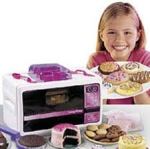
It’s also been interesting to see an uptick in girls themselves speaking out against the constraints of gender-stereotyped marketing.  This YouTube video of 5-year-old Riley speaking out about the unfairness of products marketed to girls went viral last year, reiterating that girls themselves don’t want the overflow of pink directed at them.  Another social media campaign just launched in which 13-year-old sister McKenna Pope explains she wanted to get her brother, who loves to cook, an Easy Bake Ultimate Oven for the holidays, but he protested, saying it wasn’t a toy for boys, since there were no boys pictured on the box.   She’s asking Hasbro to think through their marketing strategy again, and mentions how commonplace top male chefs are in American culture.  Hence, why not have gender-neutral packaging on the box?

By contrast, it’s been heartening not only to see the launch of GoldieBlox, a product designed to help young girls explore engineering, but the lightning-quick support the product, now in production, garnered.  There was the recent debut in Canada of a new doll meant to hew more closely to a “real girl’s” body. “Toys are not just toys,” said Lucie Follett, co-founder of Arklu, the small London-based company that makes the dolls. “When they have overly sexualized bodies they can have damaging impacts on girls’ self image.” The New York Times recently wrote about more fathers buying gifts for girls and the shift that this creates in what girls are given to play with.  The recent release of Mega Bloks Barbie Build ‘n Style line is much anticipated as the first Barbie product that involves building and construction.  It is a kind of progress, yet the sets still look pretty pink.

Research has continued to support the idea that girls learn what their gender function is meant to be through what they are given to play with or what is marketed to them.  This collection of toys for infants and toddlers includes several makeup sets.

Happily, multiple websites that support girls have offered up guides that reinforce that gifts for girls don’t have to be all about pink, princesses, and powder puffs.  Ms. Magazine offers “Put Down that Barbie!: A (Non-Gendered) Gift Guide for Girls, which is detailed by age.  The website A Mighty Girl also has a Holiday Gift Guide which includes “Small but Mighty” Stocking Stuffers as well as The Ultimate Guide to the Independent Princess.”  Melissa Wardy at Pigtail Pals and Ballcap Buddies also has a wide variety of T-shirts and other products geared toward changing up stereotypes for both girls and boys.


Easy Steps to RAISE Your Self-Esteem

  • R – Resilience
  • A – Attitude/Adaptability
  • I – Independence
  • S – Self-respect
  • E – Empowerment

For many of us, we have daily struggles at home, at work, as well as in our social lives. For adults, managing many of these relationships can be difficult. Now imagine yourself as a 15-year-old girl trying to maneuver the landscape of her everyday life.  Without tools, strategies, or resources this is nearly impossible.  Having counseled and interviewed hundreds of teen girls, I designed  a system to help them combat these challenges. I created my system to RAISE  their self-esteem. RAISE stands for: Resilience, Attitude, Independence, Self-Respect and Empowerment. Being more conscious of these terms, their meanings and their connection as a whole is critical for forming positive relationships as well as a healthy sense of self.  I see RAISE as a toolkit for self-esteem. Once young women can differentiate among these tools and know how to use them, I truly believe they will be on their way to healthier living.

Resilience (Or self perseverance) is a great defense against peer pressure.

It’s probably no surprise that teens rate their friend’s and classmates disapproval as most difficult to take; however, it may surprise you that behind friends, a far second would be their teachers and in last place are mom and dad. Disapproval by their friends and classmates will be avoided at any cost.  This is where peer pressure can come into play if they do not have a strong sense of self (healthy self-esteem).  To combat those pressures, resilience must be built up and nurtured by family and friends early on. Support systems must also be in place to continually foster their self-esteem as they grow.

Attitude– Having a positive attitude will always enhance your self-esteem.

Developmentally, the teen years are extremely complex.  Dynamics among friendships start to shift, extreme self-awareness takes hold, not to mention identity development mixed with puberty.  Throne together this is a concoction waiting for disaster.  Teen girls deal with these changes in many ways.  Some become moody, some find themselves crying over big and small issues, some begin to challenge their parents, and many express feeling sad or depressed for no reason.  That can be a very scary experience which causes extreme confusion.  Staying mentally fit with a positive attitude is key.  My technique offer suggestions and guidance on ways to build and keep up a positive attitude.

Independence- Physical activity, sports, hard work and encouragement can foster independence.

Teens must be encouraged to take on challenges big or small and need praise for their successes and understanding for their defeats.  Sports or other forms of physical activity are perfect for pushing them forward in their independence.  However, this is also where their self-esteem will be tested.  Encourage them to keep going and ultimately they will grow strong, trust in themselves and look inward for approval.  This is the pinnacle of independence.  There is something very powerful in pushing oneself further that you expect you can go to really make you realize what you are made of.  Also, trying a new physical challenge can be a huge confidence builder.  Through RAISE, I will share the benefits of these activities and how they relate to a sense of independence and ultimately positive self-esteem.

Self-Respect– Knowing and approving of yourself is key to healthy self-esteem.

Another term we could use here would be pride. Teens sometimes have difficulty with this concept because they tie it to closely to acceptance by their peers.  Sometimes teens confuse authentic friendships as well as intimate relationships with those that can actually be quite damaging.  If you ask a teen to define self-respect, most of them can. However, they have a difficult time turning those words into action. They don’t understand what self-respect looks like in practice.   My technique can show them what self-respect looks like in action. By talking to teens, I understand their views on self-respect and where they think they or other teens go wrong.  I give concrete examples of authentic relationships and self-respect.

Empowerment (or Encouragement)

Family can be another factor which may contribute to the rise or fall of positive self-esteem.  A family can be the typical structure we see on television with 2 parents, siblings, as well as extended family. However, not everyone comes from that structure, so I define family as that group of people who authentically love, protect, and care about your well-being.  Now, when looking at the typical family unit, messaging by parents is often a powerful tool for building self-esteem.  Children who feel heard by their parents and empowered perceive themselves as important to the make up of the family and tend to have more positive self-esteem.  In addition, adolescents who feel well liked by their parents, also tend to have higher self-esteem.  Children who hear positive affirmations that they are pretty, smart, or good athletes tend to have higher self-esteem as well.  Language in the home can have a direct impact on the formation of healthy adolescent self-esteem. Friends, teachers, coaches and supervisors can also be part of the family unit and play critical roles in fostering  teen empowerment.

The Triangle of Self-Perseverance: Confidence, Self-Esteem and Approval

Confidence, self-esteem and approval are all tied very closely. Combined, I call this the triangle of self-perseverance.  They are interwoven and when out of balance, we can’t be the best version of ourselves. Like a science project that successfully shows cause-and-effect when elements are evenly poured, so too happens with the proper mixture of confidence, self-esteem and approval. Through building one’s confidence we see self-esteem emerge; however, the challenge is where we seek our approval.  For many teens, they look to their peers for approval and if they don’t receive the acceptance they seek, this can damage their confidence and ultimately their self-esteem. So keeping the triangle of self-perseverance in balance is not easy.

Confidence is that undefinable ability or feeling we have that tells us that we can do it.  That we are smart enough or strong enough to take something on, win or lose.  It provides us with a sense of self where we are comfortable to try something and not fear failure, but look upon it as a growth opportunity. This builds resilience in all of us which in turn squashes fear and cultivates self-esteem.

Self-esteem is how much you like who you are and how much you accept and respect yourself. Healthy self-esteem can serve much like a shield of armor against the challenges of the world.  Self-esteem will change throughout your life, so the key to positive self-esteem is to stay confident in who you are and to surround yourself with good people who give you a healthy dose of reality as well as approval.

Approval or acceptance comes in many forms from interactions with parents, teachers, coaches to friends and colleagues.  However, ultimate approval comes from a place deep within that says, “I’m ok with me. I accept me for who I am.” Getting to that place can be tough for many of us.  During the critical teen years, youth look to their peers more than anyone else for approval. They also need to see this approval reinforced at home and school by caring adults in their lives. This is how the delicate balancing act of confidence, self-esteem and approval come together.

To raise confident kids, we must reinforce their success and failures; give them room to grow and build autonomy. Through this process, confidence will ultimately blossom.  Then we must encourage them to take on challenges big or small and praise them for their successes as well understand their defeats. This is where their self-esteem will be tested. Remember, valuable life lessons come from failure. As Robert F. Kennedy said,  “Only those who dare to fail greatly can achieve greatly.” Encourage them to keep going, teach them perseverance and resilience will follow.  Ultimately, they will grow strong, trust in themselves and look inward for approval.  Through this symmetry self-perseverance will ultimately be found.